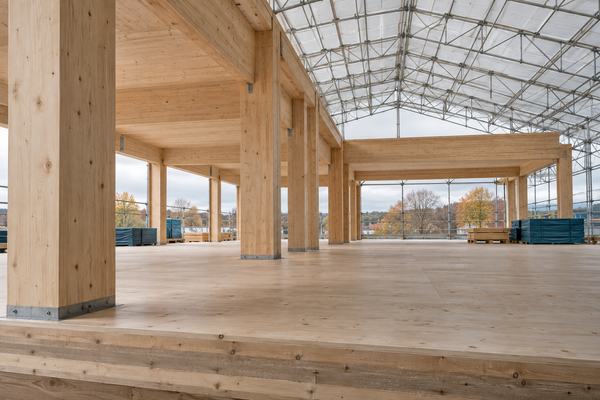
Cross laminated timber, or CLT, is a structural panel made from layers of timber boards stacked at right angles to one another and bonded under pressure. This cross-wise lamination is the key to its strength: by alternating the grain direction in each layer, CLT carries load in two directions and resists the shrinkage and movement that affect ordinary timber. The result is a large, rigid, dimensionally stable panel that works as a floor, wall, or roof element in modern mass timber construction.
How CLT is manufactured
CLT panels are built up from an odd number of layers, typically three, five, or seven, with each layer rotated ninety degrees to the one below. The boards are kiln-dried, graded, and glued across their full face, then pressed into a solid panel that can be several metres wide and long. Openings for windows, doors, and services are CNC-cut at the factory, so panels arrive on site ready to lift into place. This off-site precision is one of the reasons cross laminated timber construction is so fast compared with traditional methods.
The advantages of building with CLT
CLT combines speed, sustainability, and structural performance. Because panels are prefabricated, a CLT superstructure can be erected in a fraction of the time of concrete, with far less waste and noise on site. As a timber product, CLT stores carbon and offers a low-carbon alternative to concrete and steel. The panels also provide good thermal mass and airtightness, which is why cross laminated timber appears so often in low-energy and passive house projects.
In short: CLT is fast to erect, low in embodied carbon, and structurally efficient, which is why it has become a cornerstone of mass timber construction across the UK and Europe.
How CLT panels are connected
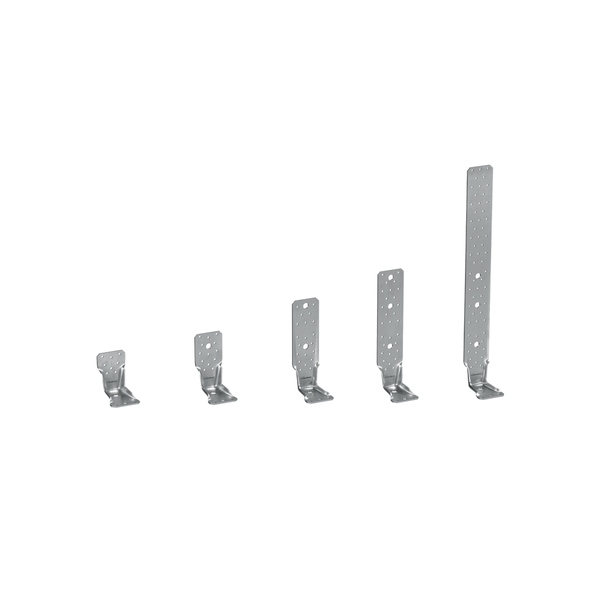
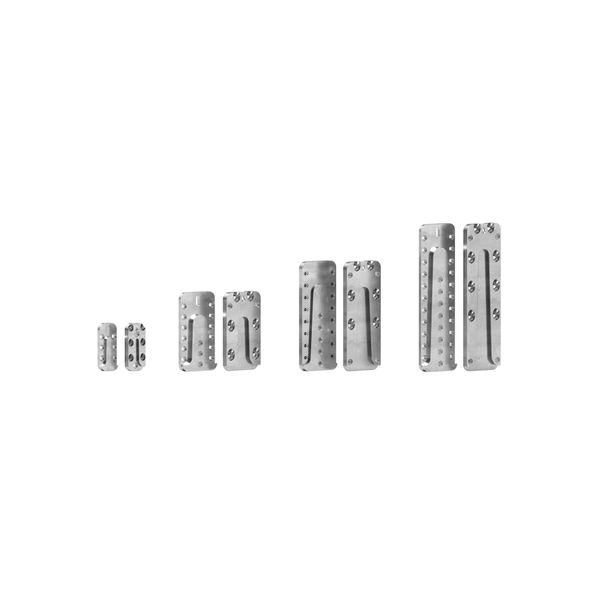
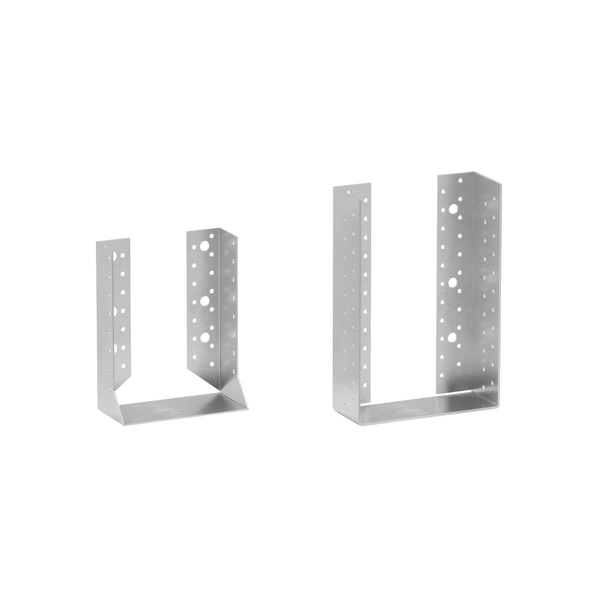
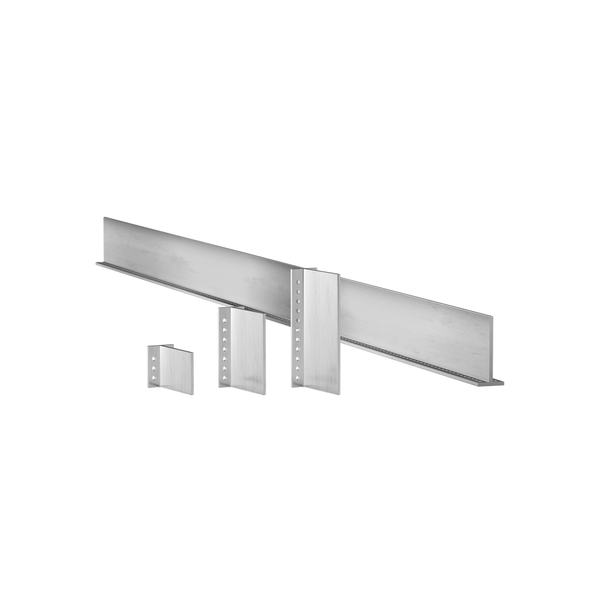
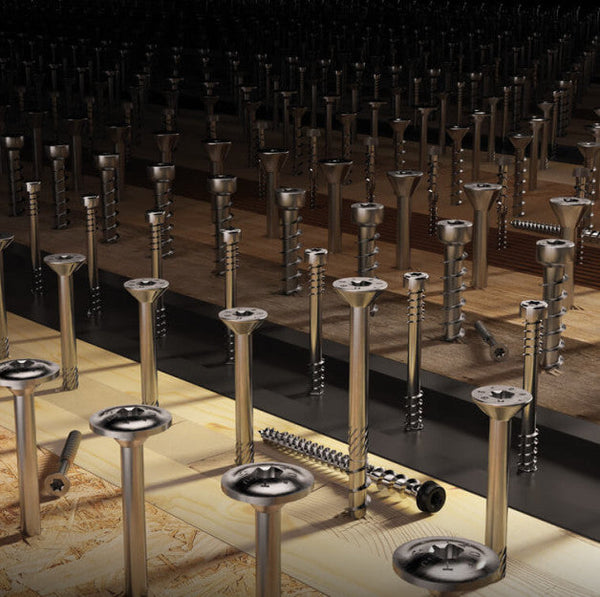
The performance of a CLT building depends heavily on how its panels are joined. Panel-to-panel, wall-to-floor, and wall-to-foundation connections must transfer significant shear and tension, especially in taller buildings and in wind or seismic design. This is where engineered connectors earn their place: hold-downs and tensile brackets resist uplift, angle brackets carry shear, and long self-tapping screws reinforce and join panels. TimbA Systems supplies the Rothoblaas connection systems used in mass timber construction, including structural plates and angle brackets and structural timber screws with the published characteristic capacities engineers need for design.
Partially threaded vs fully threaded screws in CLT
Screw choice matters in CLT. Partially threaded screws clamp panels together, while fully threaded screws reinforce against rolling shear and withdrawal, particularly where point loads or notches concentrate stress. Specifying the correct screw, in the right pattern and at the correct angle, is fundamental to a connection that develops its design capacity.
Fire, acoustics and moisture in CLT buildings
Three practical considerations shape every CLT design. In fire, CLT chars at a predictable rate and retains structural capacity, so members are sized with a sacrificial charring allowance and exposed panels are detailed accordingly. For acoustics, because solid timber transmits impact sound, CLT floors are usually built up with resilient layers and screeds to meet residential sound requirements. And moisture matters throughout: CLT must be protected from prolonged wetting during construction and detailed to stay dry in service, using appropriate membranes and sealing tapes. Addressing all three early is the difference between a CLT building that performs and one that disappoints.
CLT as part of mass timber construction
Cross laminated timber rarely works alone. In a typical mass timber building, CLT floors and walls are combined with glulam beams and columns to form a complete structural system. Understanding how CLT behaves, and how it connects to the rest of the structure, is essential for any specifier moving into engineered timber. Protecting the panels with the right building membranes and sealing tapes is equally important to long-term performance. For further technical background on CLT as a product, manufacturers such as Stora Enso publish detailed resources.