TRASPIR HOUSE 135
Breather membrane. Compare its technical sheet with the required wall or pitched-roof detail.
Choose roll and see price for TRASPIR HOUSE 135
Choose the function first
Weather protection, vapour control and temporary site protection are different jobs. Start with the layer’s role, then compare the exact product with your wall or roof detail.
Compare breather membranes for the specified wall or roof application. Check the supporting layer, water resistance, laps, fixing arrangement and time before the covering is installed. A breather membrane is not a substitute for the final roof or cladding.
Breather membrane. Compare its technical sheet with the required wall or pitched-roof detail.
Choose roll and see price for TRASPIR HOUSE 135
Breather membrane with standard and TT taped-edge versions. Check the exact version and sealing instructions.
Choose roll and see price for TRASPIR HOUSE 150Use the moisture strategy for the complete build-up. A variable membrane and a high-resistance vapour barrier are not interchangeable. Keep the air-control layer continuous at edges, laps and penetrations, and check the intended drying paths.

Humidity-variable vapour resistance. A design option where the assessed build-up calls for it, without a guarantee of drying.
Choose roll and see price for CLIMA ADAPT 80
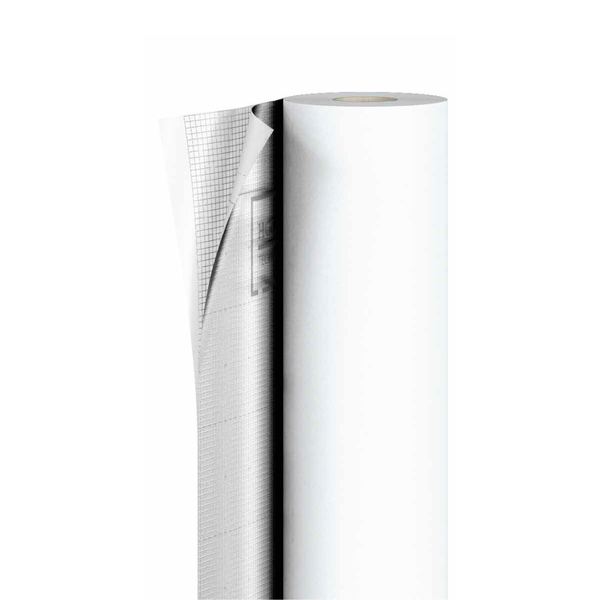
Reflective high-resistance vapour barrier. Use where the specified build-up requires this function; reflectivity is not a promised energy saving.
Choose roll and see price for STOP HOUSE ALU NET 100Light reaches the membrane through open cladding joints. Check the joint width and open area, substrate, temperature and exposure, plus the fire requirements for the complete façade. A standard breather membrane is not an automatic alternative.

UV-resistant façade membrane. The permanent UV condition is joints up to 30 mm and no more than 20% uncovered surface. Read the construction exposure and installation limits separately.
Choose roll and see price for TRASPIR EVO UV 115Choose site protection alongside drainage, sequencing, inspections and the condition of the timber. Check the substrate, adhesion, edges and penetrations. A protective membrane cannot replace a moisture-management plan or make wet timber ready to cover.

Self-adhesive protective membrane for timber building elements. Select the width and check application conditions, protection duration and the final build-up.
Choose roll and see price for DEFENCE ADHESIVE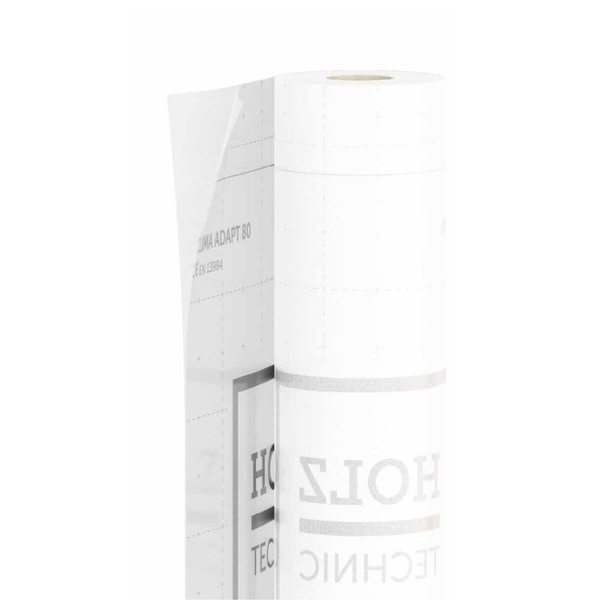
5–7 days
5–7 days
5–7 days
5–7 days

5–7 days
Before you order
In a typical heated UK timber-frame wall, a breather membrane is towards the outside of the insulation, while a vapour control layer is on or near the warm side. These are typical roles, not a universal wall section. Roofs, existing buildings and other build-ups need their own assessed detail.
Confirm which layer provides rain protection, windtightness, airtightness and vapour control. A membrane’s position and connections matter as much as its name.
Compare breather membranes and vapour control layersSd describes resistance to water-vapour diffusion, expressed as an equivalent thickness of still air. A lower value means vapour passes more readily. A higher value restricts it more. Neither is automatically better: the required resistance depends on the layer’s role and the full build-up.
Sd does not measure air leakage, resistance to rain or the fire performance of the finished wall. Check those properties separately.
Read the existing Sd-value guideCLIMA ADAPT 80 changes its vapour resistance with humidity. STOP HOUSE ALU NET 100 is a high-resistance vapour barrier. They are different design choices, not automatic substitutes.
A variable membrane can support a drying strategy where the assembly allows it. It does not guarantee that wet timber will dry or make every wall safe from condensation. Check the full layer sequence, indoor conditions and moisture assessment before changing the specified membrane.
Send your wall or roof build-upCheck the exact product’s construction exposure limit and the conditions for its final use. Laboratory UV ageing, temporary site exposure and permanent exposure behind cladding are different things.
For TRASPIR EVO UV 115, the manufacturer’s permanent UV condition is open joints up to 30 mm wide with no more than 20% of the surface uncovered. That does not turn it into a permanently exposed roof covering. Check the current datasheet, installation instructions and the project’s fire requirements.
Check the UV façade membranePlan laps, edges, windows, service penetrations and connections to adjoining materials. Choose tapes, primers, sealants and accessories for the membrane, substrate and exposure. A general-purpose tape or an adhesive edge alone does not resolve every junction.
Check that the surface preparation, installation temperature, lap dimensions and fixing details follow the selected system’s instructions. UV-exposed joints need accessories rated for that exposure too.
Browse tapes, sealants and profilesChoose the exact membrane, width and version first. Roll area is gross coverage. Deduct the required laps and allow for openings, returns, junctions and cutting waste using your layout and the product instructions. Do not divide the wall area by the gross roll area and assume that is the finished coverage.
For example, a 1.5 m × 50 m roll contains 75 m² before laps and waste. DEFENCE ADHESIVE has different width options, so check the selected roll. The product page shows its current roll price and availability. Review VAT, delivery and the basket total for the whole order.
Compare products, roll options and pricesSend the wall or roof layers from inside to outside, insulation and cladding details, intended use and heating, construction exposure and any designer’s specification. Include open-joint dimensions where relevant.
Ask about your membrane build-upProducts from other categories that work well together