Why timber cladding weathers
Timber cladding is a beautiful, low-carbon way to finish a building, but left untreated it is exposed to two forces every day: water and sunlight. Together they drive the swelling, splitting, staining and silvering that make cladding look tired long before it needs replacing. Understanding how each one attacks the timber is the first step to protecting it, and to deciding how you want your cladding to look in five and ten years' time.
Water: the force that does the damage
Water is the real problem. As timber absorbs and releases moisture it swells and shrinks, which opens up splits, lifts fixings and distorts boards. Persistent damp also feeds the algae and green growth that discolour north-facing and shaded elevations. Keeping the moisture out is what protects the timber: in soak testing, coated timber reached around 17% moisture content against 32% for untreated, staying below the roughly 26% level where the risk of decay climbs. Drier timber is more stable timber, and it stays cleaner for longer.
UV: the silver-grey patina
Sunlight is the second force. Ultraviolet light slowly breaks down the surface layer of the wood, so the timber loses its original colour and turns the familiar silver-grey. This is not a structural problem, it is an appearance one, and opinions differ: many self-builders love the natural weathered look, while others want to hold the warm tone of fresh larch, cedar or oak. Which camp you are in decides which product you need.
Why film-forming finishes struggle outdoors
Traditional paints and varnishes form a film on the surface of the timber. Outdoors that film cracks, blisters and peels as the wood moves and the sun degrades it, and once it fails it has to be sanded back before recoating. A film can also trap moisture behind it, which is the opposite of what cladding needs. For external timber, a treatment that works with the wood rather than sealing over it tends to last better and is far easier to maintain.
A breathable, penetrating alternative
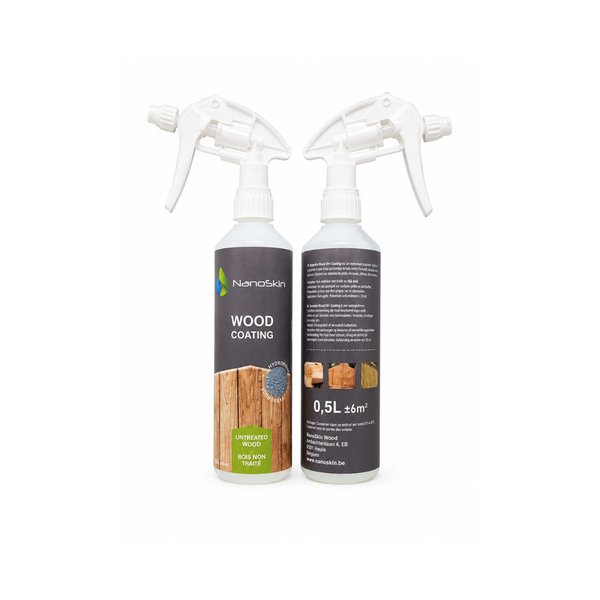
NanoSkin takes a different approach. It is a water-based nano-coating that penetrates the surface and makes the pores of the timber water-repellent, so rain beads and runs off instead of soaking in, while the wood stays breathable and can still dry out. There is no film to crack or peel, the finish is transparent so the grain shows through, and coverage is roughly 12 to 14 square metres per litre in a single coat. NanoSkin Wood makes untreated timber water-repellent and resistant to algae, indoors and out.
Grey naturally, or keep the colour
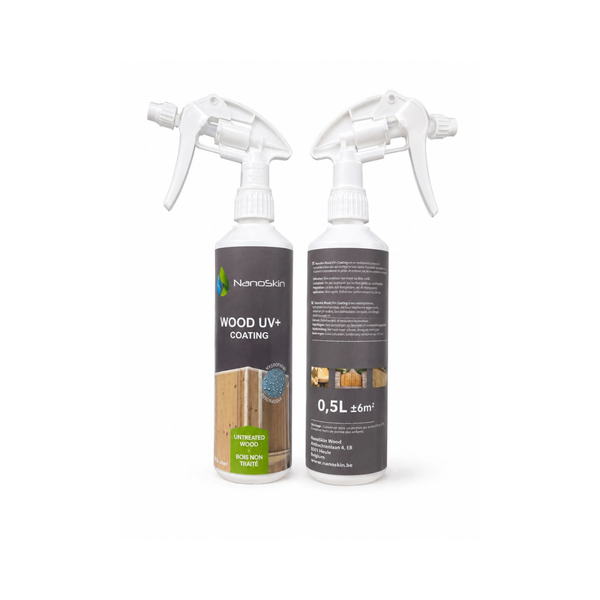
This is where the choice comes in. NanoSkin Wood protects against water and algae but lets the timber age and silver naturally, so it suits anyone happy with the weathered look but wanting a drier, cleaner, more stable board underneath. If you want to hold the original colour, NanoSkin Wood UV+ combines the same water repellency with an added UV blocker that slows the greying, keeping cladding closer to its fresh tone for longer. Same protection from water, a different answer on colour.
Which timbers, and how to apply it
These coatings suit untreated external timber such as cladding, facades, fences, gates and chalets. They are not intended for timber that is already water-repellent, and some dense or oily species, merbau and oak among them, can bleed or discolour, so it is always worth testing a small area first. Application is straightforward: a single sprayed coat that cures at room temperature in around a day before it meets water, with a light re-application every few years depending on how exposed the elevation is.
Getting timber cladding protection right
A coating is one part of a cladding that lasts. Good detailing, ventilation behind the boards and the right species for the exposure all matter, and a water-repellent treatment works by keeping water out, not by acting as a fungicide, so it slows greening and greying rather than curing rot. If you are specifying or building a timber facade in the UK and want help choosing between a natural-grey or colour-hold finish, our team at TimbA Systems can advise and supply. For wider guidance on timber durability and detailing, Timber Development UK is a useful reference.