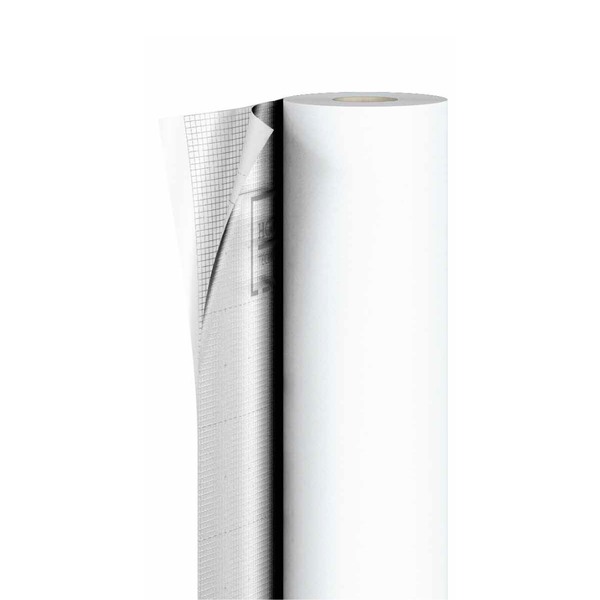
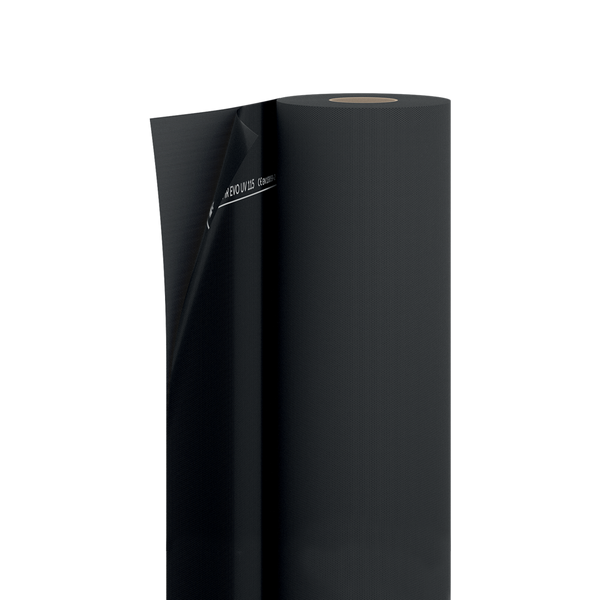
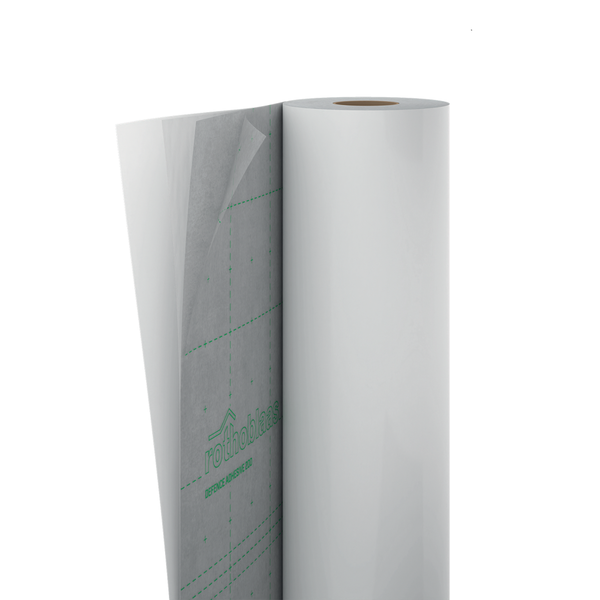
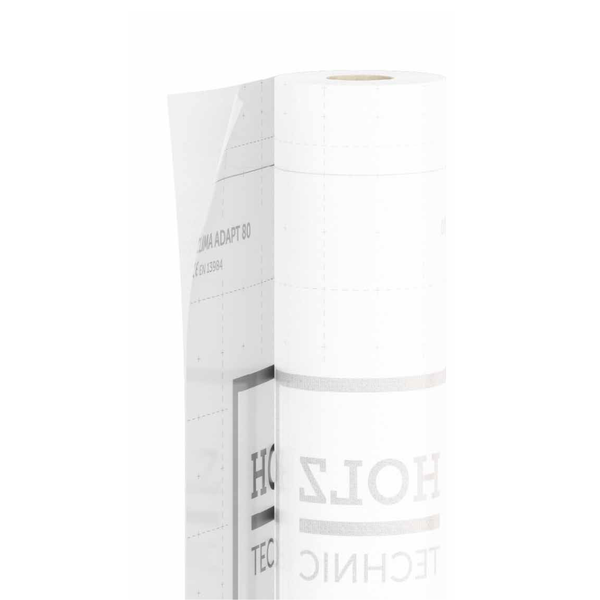
A breather membrane and a vapour control layer do different jobs. In a typical heated UK timber-frame wall, the breather membrane sits towards the outside and allows water vapour to pass while resisting rain penetration. The vapour control layer, usually on or near the warm side of the insulation, limits vapour transfer into the build-up. They are not interchangeable.
We build the system to keep rain and unwanted moisture out, while allowing moisture already in the construction to dry out through a suitable drying path. This means considering rain protection, vapour control, airtightness and drying together. It does not mean leaving gaps for air to blow through, or relying on a membrane to deal with an active leak.
If your drawing simply says “membrane”, clarify the intended function before ordering. The useful starting point is the complete wall build-up, not the colour or thickness of a roll.
Breather membrane or VCL: a quick comparison
| Question | Breather membrane | Vapour control layer (VCL) |
|---|---|---|
| Main role | Resist external water penetration while allowing vapour passage | Restrict water vapour transfer into the construction |
| Typical position | Outside the insulation, within the specified weather-resisting assembly | On or near the warm side of the insulation |
| Check before buying | Application, water resistance, vapour resistance and exposure limits | Vapour resistance and suitability for the assessed build-up |
| Key detail | Continuity at laps, openings and junctions | Continuity at joints, edges and penetrations |
These are typical positions, not a universal wall section. Rothoblaas separates breathable membranes, vapour control layers and variable-diffusion membranes in its Tapes, Membranes, Sealants and Fire Protection catalogue. Select the function first, then check the exact product's technical data sheet and installation instructions.
Why windtightness matters
A continuous windtight layer on the outside protects the insulation from wind moving through or around it. This helps the insulation perform as intended and protects the build-up from weather. Rothoblaas explains this role in its TRASPIR 95 guidance for closed-joint façades.
Windtight does not mean vapour-tight. A suitable breather membrane can resist air movement and rain while still allowing water vapour to pass. Seal laps, edges and connections as specified. An open joint is not a useful drying strategy.
Vapour control and airtightness do different jobs
Vapour control limits diffusion through materials. Airtightness limits air leaking through gaps and carrying moisture into the construction. The internal air-control layer and external windtight layer therefore need their own continuous connections. One product may fulfil more than one function, but the finished system depends on its joints, penetrations and installation.
For site coordination, ask one practical question: who joins each layer to the next trade's work? The answer is especially useful before windows, services and linings arrive.
The awkward junction is where the plan gets tested
A straight run of membrane is only part of the work. Window corners, service entries and changes in level make continuity harder to achieve. Limited scaffold access, a loose sheet and changing weather also affect how the installer can complete the detail.
Before closing the work, check the exact junction detail, the condition of the bonding surface and the specified tapes or accessories. Follow the product instructions for preparation and installation conditions. Agree safe access and the sequence with the site team, including who finishes the connection around the window. A fold or loose edge is a reason to inspect the detail, not proof by itself that the completed system has failed.
Use Rothoblaas technical data to check the system
Start with the catalogue to compare functions, then use the current technical data sheet for the exact product and version. For example, the TRASPIR 150 technical data sheet lists water-vapour transmission, watertightness and resistance to air penetration separately. They describe different properties; the word “breathable” alone does not answer all three questions.
Read the exposure notes as well as the headline table. That TRASPIR 150 sheet distinguishes laboratory UV ageing from its precautionary limit for weather exposure during construction. Plan protection and installation around the current instructions, not a general assumption about how long a roll can stay uncovered.
Allow drying without losing control of moisture
A vapour-open outer layer can support outward drying where the rest of the assembly allows it. Some designs also use a variable-resistance internal membrane to support drying back towards the room under suitable conditions. The CLIMA CONTROL 80 technical data sheet describes how its vapour resistance changes with humidity and how this can support drying during reverse vapour diffusion.
This is a design option, not an automatic replacement for every VCL. Check the full build-up, climate and moisture assessment. Existing moisture needs a viable drying path; simply adding a more impermeable layer can restrict that path. Repair leaks and assess wet materials before closing the wall.
What to send with a membrane enquiry
A useful enquiry can be short. Include these five items so the discussion starts with the build rather than an isolated product name:
- The wall section, with materials listed from inside to outside.
- The intended use of the space and whether it is heated.
- The insulation, sheathing and cladding information.
- The expected construction exposure and any open cladding joints.
- Details at the base, openings and service penetrations, plus the designer's membrane requirements.
This is also a helpful check before changing an item on a purchase list. If the replacement performs a different function, pause the substitution and get the detail confirmed.
Common questions
Can a breather membrane replace a VCL?
No, not simply because both come on a roll. Their vapour-control functions differ. Any alternative needs to satisfy the assessed design and documented product requirements.
Does every timber building need the same two sheets?
No. The required functions may be provided by different materials or combined systems. The build-up, use and exposure determine the design.
Can a wall be windtight and still dry out?
Yes. Resisting air movement and allowing water-vapour diffusion are different properties. Use a suitable membrane, sealed details and a build-up that provides the required drying path.
Get the right layer and the right details
For installation guidance, continue with our existing breather membrane guide. For the meaning of vapour resistance, see Sd value in timber buildings. Browse membranes and sealing tapes, or send TimbA your drawing to discuss the materials your detail needs.
Typical heated UK timber-frame context. Final membrane selection and condensation assessment remain project-specific.
Illustration