Fastener spacing is the minimum distance between screws, and from each screw to the edge and the end of the timber. The minimums come from the screw's datasheet and its European Technical Assessment, and they change with the screw diameter, the timber density and whether the timber is pre-drilled. Too close, and the timber splits and the joint never reaches its rated capacity.
Why does fastener spacing matter?
Timber fastener spacing is one of the quiet details that decides whether a connection performs. Place screws too close to an edge, an end, or each other, and the timber can split as the fixing drives in, so the joint never reaches the capacity the screw is rated for. Get the spacing right, and each fixing works as designed, sharing load cleanly across the connection. For any structural timber job, from a deck to a mass timber frame, correct spacing and edge distances are as important as choosing the right screw in the first place.
What are spacing, edge distance and end distance?
Three measurements govern how fixings are laid out. Spacing is the distance between one screw and the next. Edge distance is the distance from a screw to the side of the timber. End distance is the distance to the end of the member, where timber is most prone to splitting. Each is measured differently for loaded and unloaded edges, and the values change with the direction of the grain and the direction of the load. Understanding these three terms is the starting point for setting out any structural connection.
Where do the spacing values come from?
Fastener spacing is not guesswork. For every structural screw, the manufacturer publishes minimum spacings, edge distances, and end distances in its European Technical Assessment (ETA) and datasheet, and these feed directly into connection design to Eurocode 5. The minimums exist to prevent splitting and to guarantee the characteristic capacities used in design. Because the figures vary by screw diameter, timber species and density, and whether the timber is pre-drilled, the correct values always come from the datasheet for the specific product, not from a rule of thumb.
What are the common spacing mistakes?
A few errors come up again and again. Screws driven too close to the end of a member split the timber before the connection is even loaded. Fixings packed too tightly together concentrate stress and weaken the joint. Dense or brittle species are fixed without the pre-drilling the datasheet calls for. And fixings are sometimes staggered by eye rather than set out to the specified pattern. Each of these quietly reduces the capacity the design relied on, which is why the spacing should be set out from the datasheet, not adjusted to suit the timber in front of you.
Using a fastener spacing calculator
The quickest way to get spacing and quantities right is to work from the manufacturer's own data. Our free Rothoblaas fastener calculator lets you search a connector, choose timber-to-timber or timber-to-concrete, and return box quantities drawn straight from the official datasheets. It takes the arithmetic out of the job and keeps you on the published values. For anything structural, we still recommend the final layout is checked and signed off by the project engineer, because spacing sits inside the wider connection design.
Choose the right screw, then space it
Spacing only works once the right fixing has been selected. A timber-to-timber joint, a timber-to-concrete base, a withdrawal-loaded connection, and a shear connection each call for a different screw or connector, with the corrosion coating matched to the service conditions. Examples from our timber screw range include:
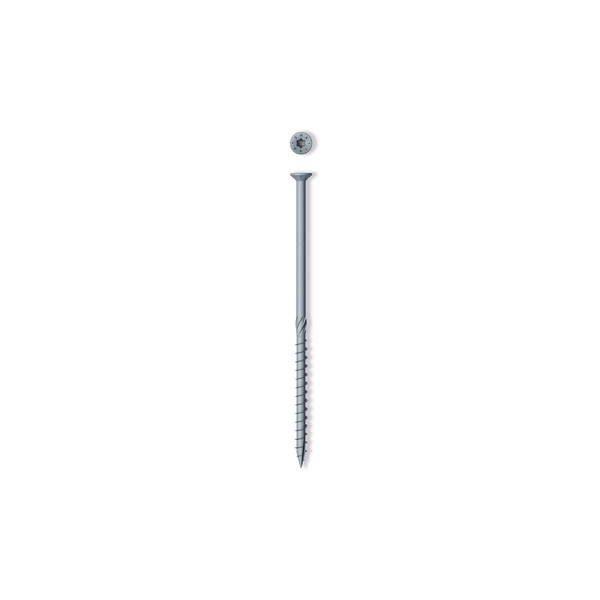
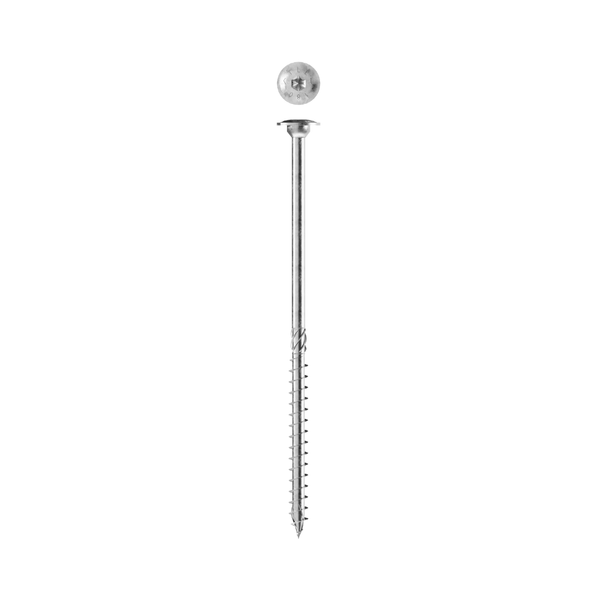
- The TLL flange-head timber screw: for structural timber frame and load-bearing connections where pull-through resistance matters
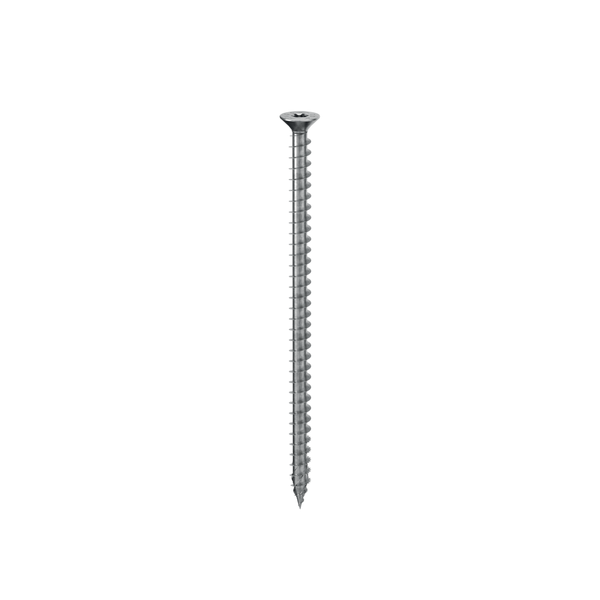
- The SNK countersunk timber screw: a countersunk option where a flush finish is required; check the exact product coating and exposure limits before outdoor use
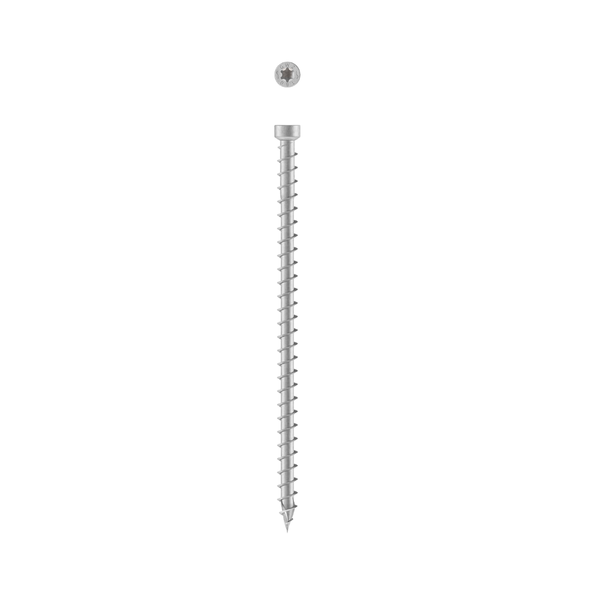
- The HTS-HT full thread screw: for woodwork, furniture and wood-based panels such as MDF; it is not a general recommendation for highly loaded hardwood or glulam connections
Choose using the exact screw datasheet and the applicable connection design. Full thread alone does not establish structural suitability. See our TLL, SNK and HTS-HT comparison and the supplier HTS guidance. Browse the structural timber screws and plates and angle brackets ranges.
Frequently asked questions
Can I use a rule of thumb for screw spacing?
No. The values change with diameter, species, density and pre-drilling, so they come from the datasheet for that exact screw.
Why is end distance the one to watch?
The end of a member is where timber splits most easily, so a screw driven too close to the end can split it before the joint is loaded.
Do I need to pre-drill?
When the datasheet calls for it, which is usually in dense or brittle species.
Engineering support for timber connections
TimbA Systems is a timber construction specialist and an authorised Rothoblaas distributor. We supply the fixings a connection needs and, with our engineering partners, advise on how to detail and lay them out. If you are working on a structural timber connection in the UK, our team can help you get the fixing and the spacing right. For wider industry guidance on timber design and standards, Timber Development UK is a useful reference.