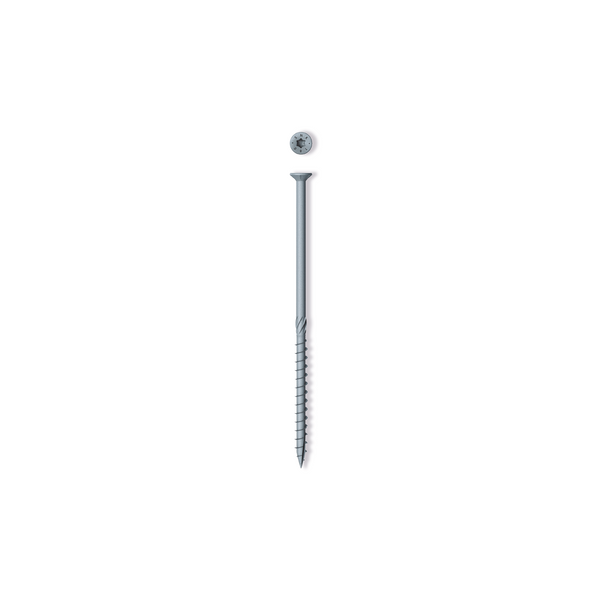
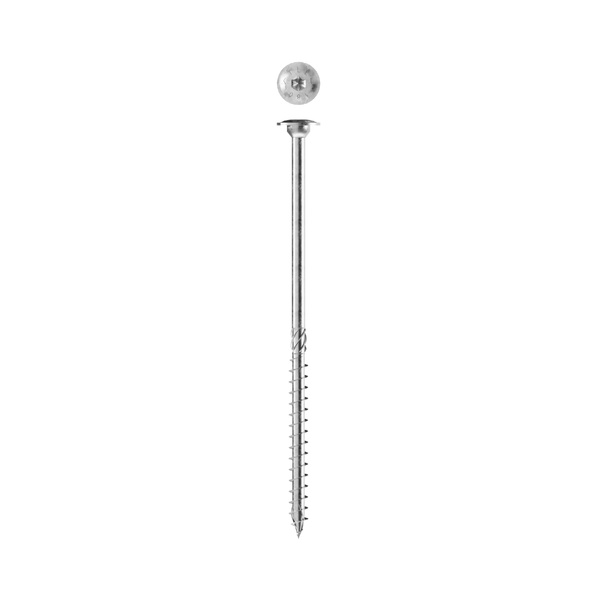
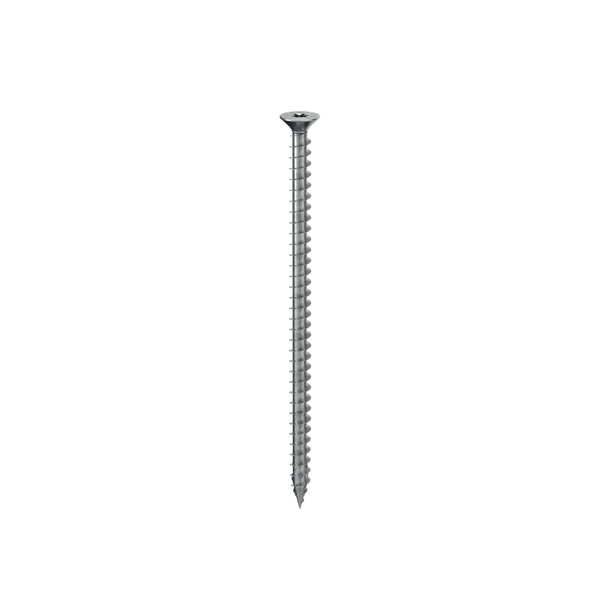
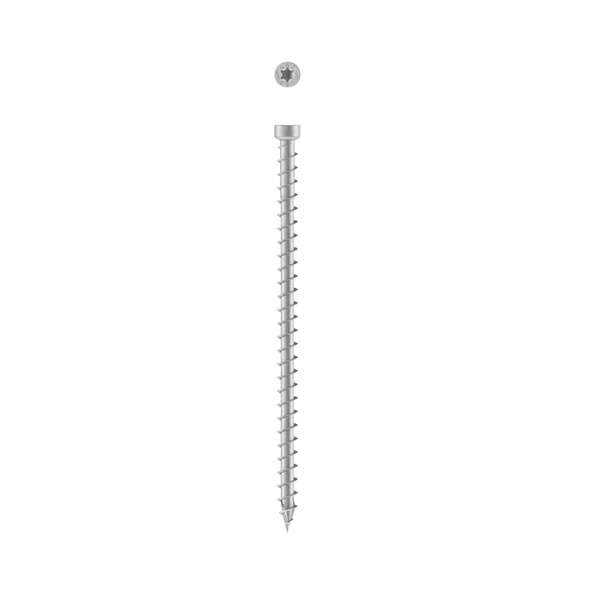
If you are fixing timber to timber, timber to concrete, or reinforcing a beam, the screw is doing structural work. It carries the load. Structural timber screws have replaced nails and many bolted connections in modern carpentry because they install faster, hold harder, and come with tested performance values an engineer can actually design with. This guide explains what makes a screw structural, how to choose the right type and size, and how to be sure it is certified for use in the UK.
What makes a screw "structural"?
A structural timber screw is not simply a longer wood screw. It is manufactured to a controlled hardness, has a defined thread geometry, and carries published characteristic load values from independent testing. In practice that means it holds a European Technical Assessment (ETA) and is marked accordingly, so its withdrawal and shear capacities are known rather than guessed.
General hardware-shop wood screws have none of this. They can snap under load, they have no published capacity, and they cannot legally be specified for a load-bearing connection. For anything that holds weight, a roof, a deck frame, a wall plate, a beam, you want a screw with an ETA behind it. If you are weighing up the different screw types for a job, our guide to wood screws and which type suits which job sets out the basics before you get to the structural detail here.
Rule of thumb: if the connection carries load, the screw needs published, tested capacity values. If it is only holding trim or a batten, a general screw will do.
Fully threaded or partially threaded?
After certification, this is the most important choice you make, because the two types do completely different jobs.
Partially threaded
Thread on the lower portion only, with a smooth shank above. As you drive it, the threaded tip bites the far timber while the smooth shank slides through the near piece, pulling the two members tightly together. Use these where you need to clamp boards or close a gap, for example fixing a joist to a header or drawing decking down onto a joist.
Fully threaded
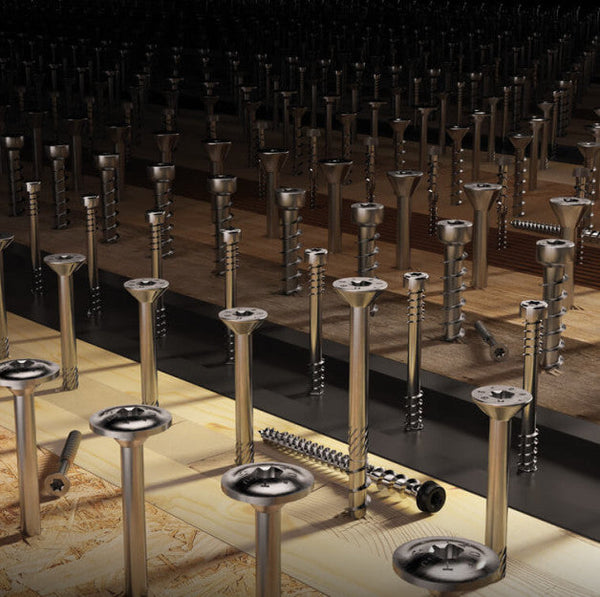
Thread along the entire length. These do not pull members together; instead they grip uniformly along their full length, giving very high withdrawal resistance and excellent performance when installed at an angle. Use them for reinforcement, for screws loaded along their axis, and for inclined connections where the screw works mainly in tension. Fully threaded screws are the workhorse of mass timber and beam reinforcement.
| What you need | Choose |
|---|---|
| Pull two members tightly together | Partially threaded |
| Maximum pull-out (withdrawal) resistance | Fully threaded |
| Angled or inclined connections | Fully threaded |
| Beam, notch, or support reinforcement | Fully threaded |
| General joist and frame fixing | Partially threaded |
Getting the size right
Diameter and length drive capacity, but bigger is not automatically better. Oversizing wastes money and can split the timber; undersizing risks failure.
- Diameter: structural timber screws typically run from around 4mm up to 13mm. Higher loads and thicker timber call for larger diameters.
- Length: you need enough thread engagement in the receiving member to develop the load. The exact penetration comes from the design, not from eye.
- Spacing and distances: screws need minimum spacing from each other and minimum distances from edges and ends. Get too close and the timber splits and capacity collapses. These values come from Eurocode 5 and the screw's ETA.
This is where engineering matters. The difference between a connection that works and one that quietly fails is usually spacing, edge distance, and the right screw count, not the screw itself. If you are unsure, it is worth having the connection sized properly.
The drive: why Torx matters for installation
Most quality structural screws now use a Torx (star) drive rather than a slot or Pozi. Torx grips the bit far better, which means less cam-out, less stripped heads, and cleaner driving at the high torque these screws need. It is an installation advantage rather than a structural one, but on a job with hundreds of screws it saves real time and frustration. For the practical side of choosing by drive and head, see our Torx timber screws buying guide.
Withdrawal, shear, and why screws beat nails
Two loads matter. Withdrawal is the screw being pulled out along its axis; shear is the timber trying to slide across it. Modern structural screws outperform nails of a similar size in withdrawal because of their thread, which is why a handful of correctly placed screws can replace many nails or a bolted steel plate. Fully threaded screws set at an angle are especially efficient, because they carry the load in tension rather than bending.
Do you need to pre-drill?
Most modern structural screws are self-tapping or self-drilling and need no pilot hole in softwood. Pre-drilling is still sensible near ends and edges, in dense hardwoods, and at larger diameters, to stop the timber splitting. The screw's ETA states when pre-drilling is required, so check it for the diameter you are using.
Coatings and service class: match the screw to the environment
A screw in a dry internal floor faces very different conditions to one in an exposed deck. Corrosion resistance is chosen by service class:
- Service Class 1, dry and internal: standard zinc-coated screws are usually fine.
- Service Class 2, occasional damp or covered external: higher-grade coatings.
- Service Class 3, exposed external or treated timber: stainless steel or specialist coatings, because moisture and modern timber treatments accelerate corrosion.
Choosing between stainless and a coated finish trips a lot of people up, so we cover it in detail in stainless vs coated screws: what's the difference. For decking and outdoor work specifically, see our screws and connectors for decks. For general framing and structure, browse screws for timber.
Certification and UK compliance
In the UK a structural timber screw should carry a European Technical Assessment (ETA) and be UKCA or CE marked, with a Declaration of Performance available. The ETA gives the tested characteristic values an engineer designs with; the marking confirms the screw is manufactured to that assessment. Connection design itself follows Eurocode 5, the timber design standard. You can read what an ETA is at the EOTA website, and the rules on UKCA marking on gov.uk.
The TimbA approach
We are a structural engineering consultancy as well as an authorised Rothoblaas distributor, so we do not just sell the screw, we help you specify it. If you know what you need, browse our structural screws for timber. If you are working out the connection, talk to our engineering team and we will size it to Eurocode 5 and point you to the right screw for the job.