Why the right decking screw matters
Decking screws have one of the hardest jobs in your garden. They sit outside in all weathers, hold your deck together through years of expansion and contraction, and have to resist rust the whole time. Choose the wrong screw and you get rust stains streaking your boards, heads that snap on the way in, or fixings that work loose after a winter or two. Choose the right one and you will not think about them again. This guide walks you through the choice in plain terms, so you buy once and buy right.
Stainless steel or coated: which do you need?
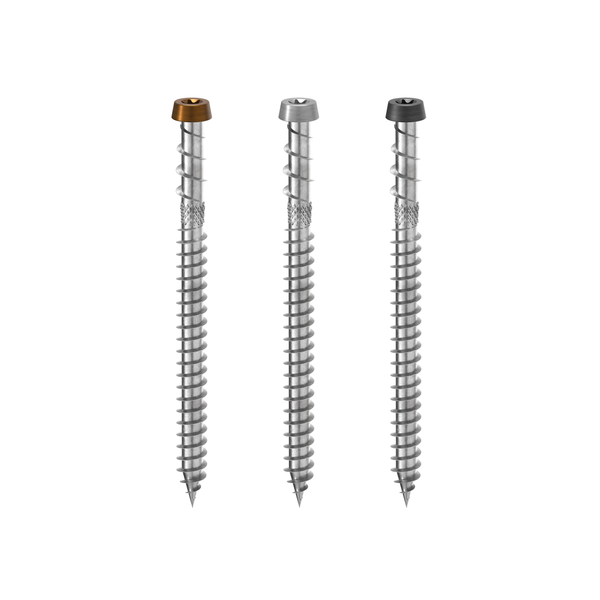
This is the most important decision, and it comes down to your timber. Stainless steel decking screws are the safe choice for hardwood, tropical timbers like ipe and balau, and any deck near the coast or in a damp, shaded spot. These timbers contain tannins that react with ordinary screws and leave ugly black stains, and stainless simply does not corrode. Coated carbon-steel screws are fine for treated softwood decks in normal garden conditions, and they cost a little less. If in doubt, go stainless: it is the one upgrade you will never regret on a deck. For the full comparison, see our guide to stainless vs coated screws.
Rule of thumb: hardwood, composite, or anywhere near the sea or persistent damp, choose stainless steel. Treated softwood in an ordinary garden, a quality coated screw is fine.
What size decking screw should you use?
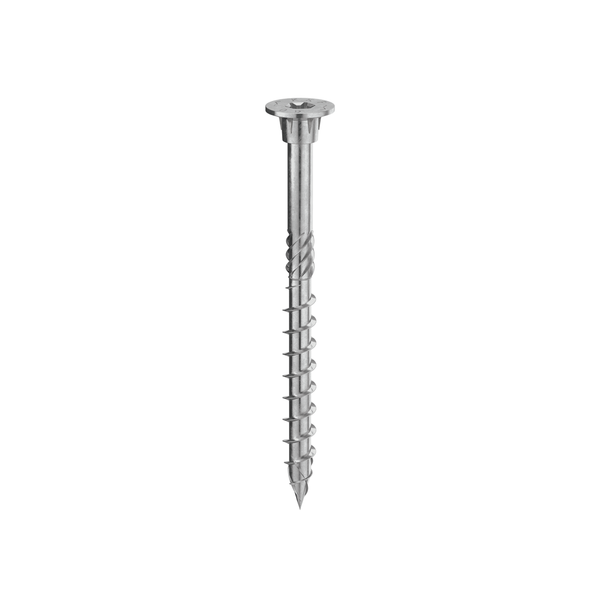
For most decks, a screw around 5.0mm to 5.5mm in diameter is ideal: strong enough to hold, slim enough not to split the board. Length is the simple part. As a guide, your screw should be roughly two and a half times the thickness of the board you are fixing, so it bites well into the joist below. For a typical 25mm deck board, a 60mm screw is about right; for thicker boards, step up accordingly. Always fix into the joist, not just the board.
How many will you need?
Once you have the right screw and size, it is worth working out quantities before you order, so you are not stopping mid-job or paying for a second delivery. We break the calculation down in how many decking screws do you need, based on board width, joist spacing, and deck area.
Countersunk heads and clean finishes
Decking screws have countersunk heads designed to pull flush with the board surface, so nothing catches bare feet. Many have small ribs under the head that cut a neat recess as they drive, leaving a tidy finish without pre-drilling. If you want no visible screws at all, concealed fastening systems clip the boards down from the side or underneath, leaving a completely clean surface; we cover those below.
Visible screws or hidden fixings?
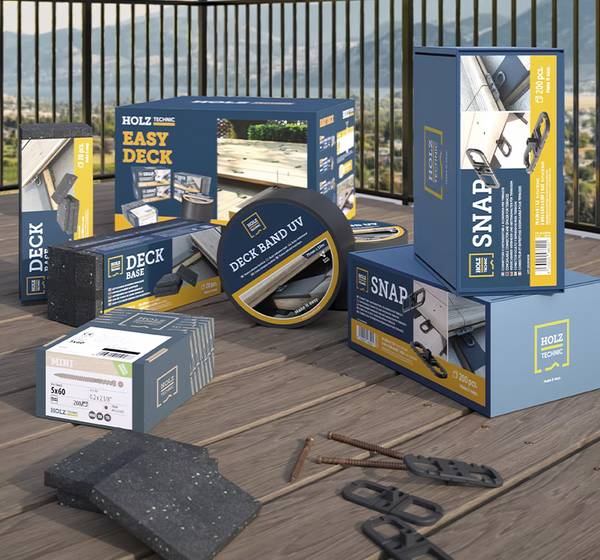
Most decks are built with screws driven through the face of the board, which is quick, strong, and reliable. If you prefer a flawless, fixing-free surface, concealed connectors are worth considering, especially with grooved hardwood or composite boards. They cost more and take a little longer, but the finish is premium. We weigh up both approaches in hidden vs visible deck fixings, and our decking screws and connectors range includes both, so you can pick the look you want.
Don't forget the joists underneath
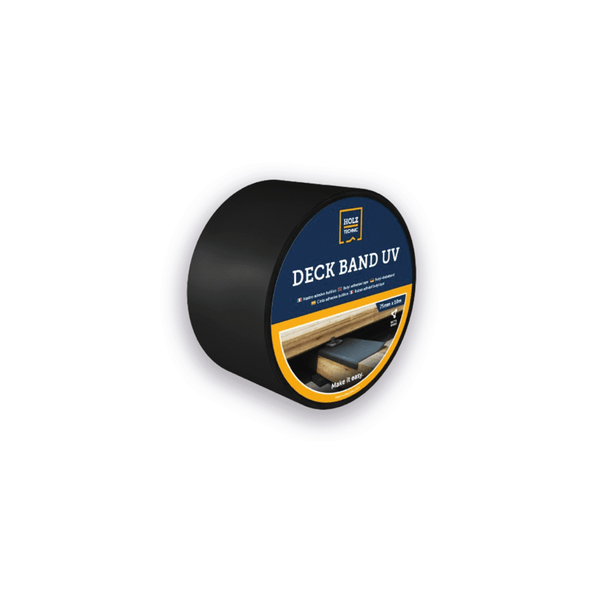
The screws hold the boards, but the joists carry the deck, and they fail first if water sits on them at every fixing point. A strip of joist protection tape along the top of each joist shields the timber where screws penetrate, and it is the cheapest way to add years to a deck. It is a small extra step that makes a real difference to how long your deck lasts, and we explain it fully in how to stop your deck rotting: joist protection explained.
Getting it right the first time
Choosing decking screws is not complicated once you know the rules: match the screw to the timber, size it to the board, fix into the joists, and protect the substructure. If you are still unsure which screw suits your boards, that is exactly the kind of question our team answers every day. We are timber fixing specialists, not a general shed, so we can point you to the right product rather than the nearest one. Browse our decking range or get in touch before you buy.