A deck with no screw heads on show looks cleaner, lasts longer, and feels better underfoot. Hidden decking fasteners make that possible by fixing each board from the side or underneath instead of through the face. This guide explains how the main concealed systems work, where each one suits, and what you gain over face-screwing, so you can pick the right method before the first board goes down.
Why hide the fasteners at all
Face-fixing, driving screws straight down through the board, is quick but leaves two screw heads on every board at every joist. Beyond the look, each of those holes is a path for water into the timber, which is where surface rot and staining start. Hidden fasteners remove the visible holes entirely. The result is a uniform surface, fewer entry points for moisture, and on many systems a consistent gap between boards set automatically.
The main hidden fixing methods
| Method | How it works | Best for |
|---|---|---|
| Concealed connectors / clips | A connector sits between board and joist, gripping the board edge and setting the gap | Grooved boards, fast repeatable installation, fully hidden finish |
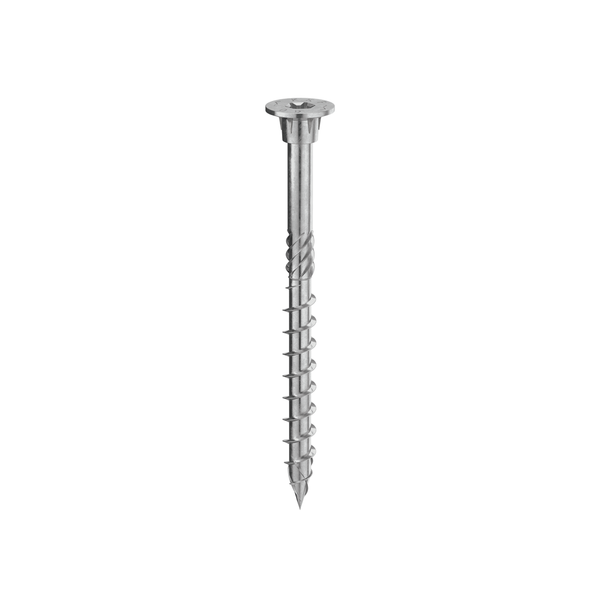
| Side-fixing screws | Screws drive through the board edge at an angle into the joist | Hardwood and boards without a groove, maximum hold |
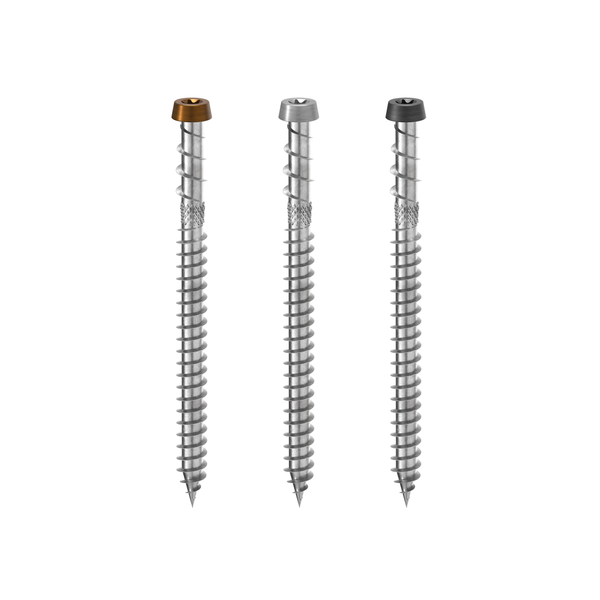
| Coloured face screws | Screws colour-matched to the board so heads blend in | Near-invisible look where a true concealed system is not practical |
Concealed connector systems are the cleanest result and the quickest to install once you are in a rhythm, because the connector sets the board spacing as you go. Side-fixing gives the strongest mechanical hold, which matters for dense hardwoods. Coloured screws are the simple fallback when the board profile or budget does not suit a full concealed system.
Matching the system to the board
The fixing method has to suit the decking itself. Grooved boards are designed for connector clips that locate in the groove. Ungrooved boards usually take side-fixing screws. Board material matters too: softwood, treated timber, and dense tropical hardwoods behave differently, and hardwoods in particular need pre-drilling and corrosion-resistant fixings. Always confirm the connector or screw is rated for the board you are laying before you commit to a system across the whole deck.
Worth knowing: a concealed connector does two jobs at once. It hides the fixing and it sets a consistent gap between boards, which keeps the deck draining and looking even without you measuring every joint.
Don't forget what's underneath
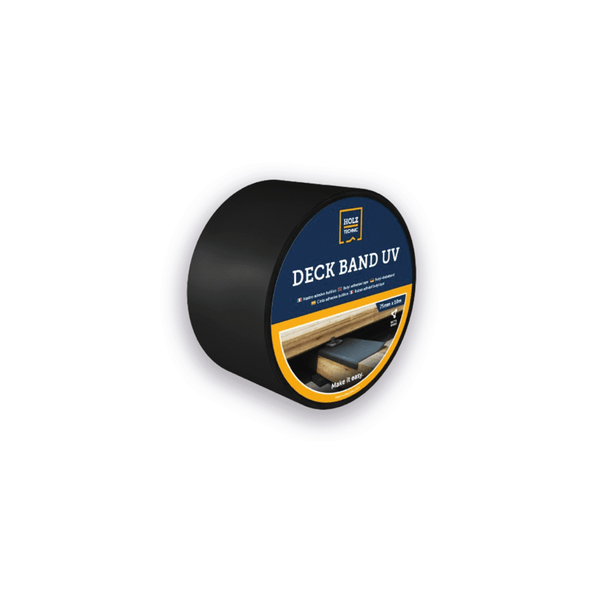
A hidden-fixed deck looks immaculate on day one, but its life is decided by the joists below. Every fixing point is a place where water can sit on the joist top. Protecting the joists with a self-adhesive butyl tape over their top edge stops water pooling on the bearing surface and dramatically slows the rot that ends most decks early. It is a small step at build time that protects everything you fix above it.
Fitting hidden fasteners well
- Set out the first board straight and square; every later board references it, so an early error repeats across the deck.
- Use the connector spacing the system specifies at every joist, not just some, so each board is properly held.
- Pre-drill dense hardwoods to prevent splitting at the board edge where side-fixing screws enter.
- Use corrosion-resistant fixings, stainless or coated, since they sit in a permanently damp environment.
Hidden decking systems from TimbA
TimbA Systems stocks concealed decking systems and the fixings to match the boards you are laying. Our decking screws and concealed connectors include clip systems that set the board gap automatically and side-fixing options for hardwood, while butyl joist tape protects the timber underneath. For stainless and coated options suited to the wet environment a deck lives in, the same range covers softwood through to dense hardwood. If you want to check a fixing suits your board before ordering, the team can advise, and the fastener calculator works out how many you need.
Choose the system to suit the board, protect the joists, and you get a deck that looks clean the day it is finished and stays sound for years after.