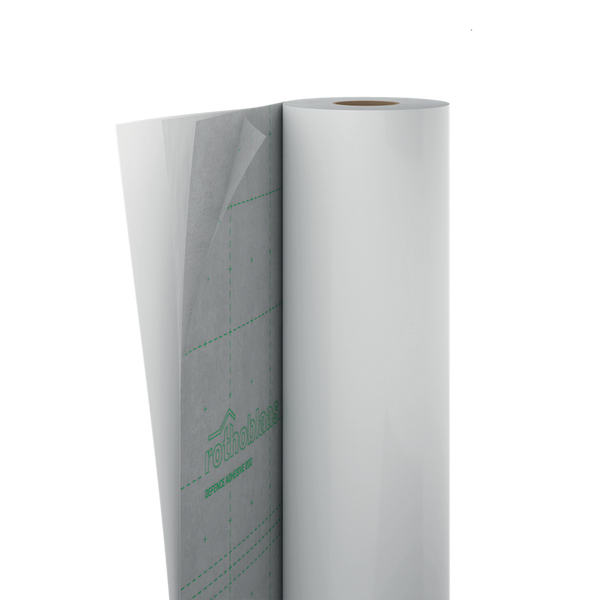
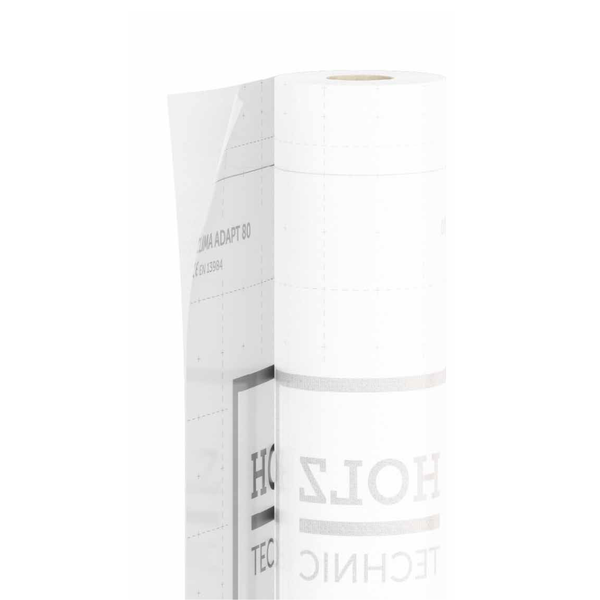
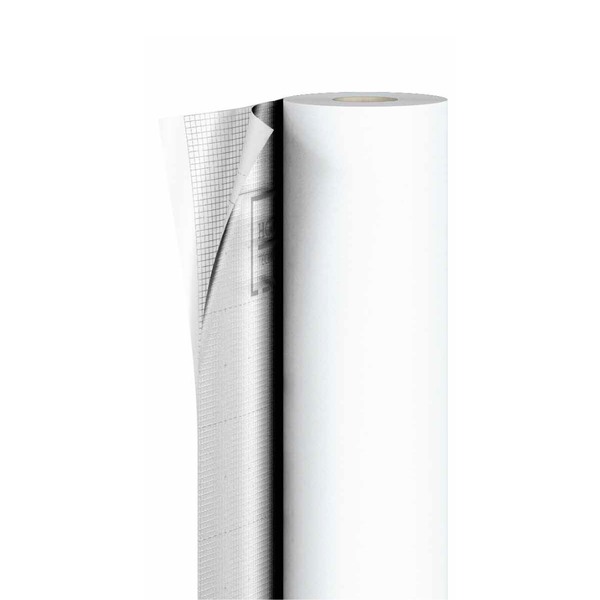
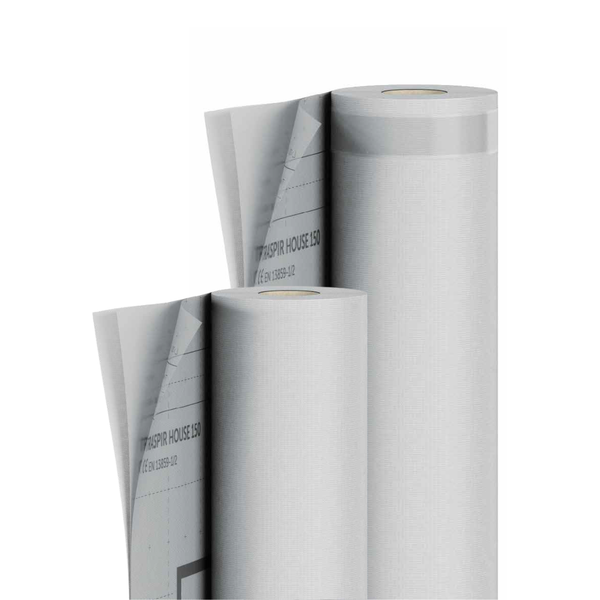
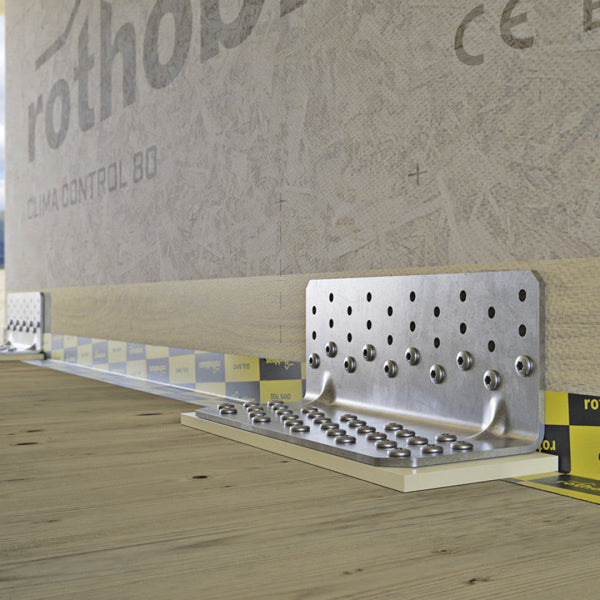
Sd value, or equivalent air layer thickness, measures how strongly a material resists water vapour diffusion. It is expressed in metres and calculated as μ (the material's vapour diffusion factor) multiplied by its thickness. A higher Sd means more vapour resistance. In timber construction, the aim is usually a vapour-open exterior and a more controlled, airtight interior, which reduces the risk of interstitial condensation.
Why Sd value matters
Get vapour flow wrong and you risk condensation inside the build-up, which can foster mould, damage timber, and degrade insulation. Understanding Sd helps you:
- Prevent interstitial condensation that harms timber and reduces thermal performance
- Select and position vapour control layers (VCLs), airtight membranes, breather membranes, tapes, and sealants correctly
- Build assemblies that stay robust across seasons, including the UK's variable maritime climate and internal moisture loads
The key concept
Sd = μ × thickness. For example, a board with μ = 50 at 0.02 m thick has an Sd of roughly 1.0 m. Typical ranges are:
- Vapour-open breather membranes: Sd ≈ 0.02–0.3 m
- Smart or variable membranes (interior): Sd ≈ 0.25–25 m, depending on humidity
- Standard interior VCLs: Sd ≈ 10–100+ m
The general rule is lower Sd outward, higher Sd inward, while keeping the layer airtight on the warm side.
Important distinction: airtightness and Sd are not the same thing. Airtightness stops air leakage; Sd governs vapour diffusion. A durable build-up usually needs both, airtight inside and vapour-open outside.
How to use Sd value in a timber build-up
- Define climate and use: location, exposure, and internal moisture loads from bathrooms, kitchens, and occupancy
- Map each layer: thickness, μ (or Sd), thermal conductivity, and position
- Set the vapour gradient: a vapour-open, wind and water-tight breather membrane outside; timber and insulation that can dry; an airtight membrane or VCL with controlled Sd inside, with smart membranes worth considering for seasonal drying
- Ensure warm-side airtightness: use compatible tapes, grommets, and sealants around penetrations, with a continuous layer at junctions
- Check critical details: roofs (cold-side ventilation where appropriate), floor and wall junctions, window reveals, and service penetrations
- Validate with modelling: use EN ISO 13788 or dynamic WUFI methods to assess interstitial condensation across the annual cycle
- Specify as a system: select membranes, tapes, and sealants tested together, and check fire, durability, and installation guidance
Example: UK timber frame wall
From outside to inside: rainscreen cladding, ventilated cavity, sheathing, breather membrane (Sd ≈ 0.05 m), insulation, service zone, smart membrane (variable Sd, e.g. 0.25–25 m), and internal lining.
Example: mass timber roof
Use robust waterproofing over insulation, and either enable outward drying with low-Sd layers above the insulation or inward drying via a smart membrane below it, always verified by hygrothermal modelling.
Common questions
Is higher Sd always better inside?
Not always. A very high-Sd VCL can trap moisture. Smart membranes can allow two-way drying while still protecting the build-up in winter; verify the choice with modelling.
Can I rely on "vapour-open outside, tight inside" without analysis?
It is a sound rule of thumb, but run hygrothermal analysis to be safe, especially for mass timber, dark claddings, or high internal moisture loads.
Do tapes and sealants affect Sd?
Locally, yes, but their main job is airtightness and continuity. Use system-tested components compatible with your membranes.
What standards apply?
Refer to UK Building Regulations guidance and BS 5250 for moisture in buildings, EN ISO 13788 for condensation assessment, and dynamic methods such as WUFI for greater accuracy.
Specifying with confidence
Understanding Sd value lets you design timber walls and roofs that manage vapour safely: vapour-open to the outside, controlled and airtight to the inside, validated by analysis. For UK timber projects, tailored modelling is the most reliable route to durability. TimbA Systems offers consultation, including hygrothermal condensation analysis for different build-ups, alongside the membranes and sealants, tapes and profiles needed to deliver the specification on site. Get in touch to specify the right sequence for your climate and build-up.